
$233 Billion in Default: The Debt Bomb the Establishment Refuses to Name
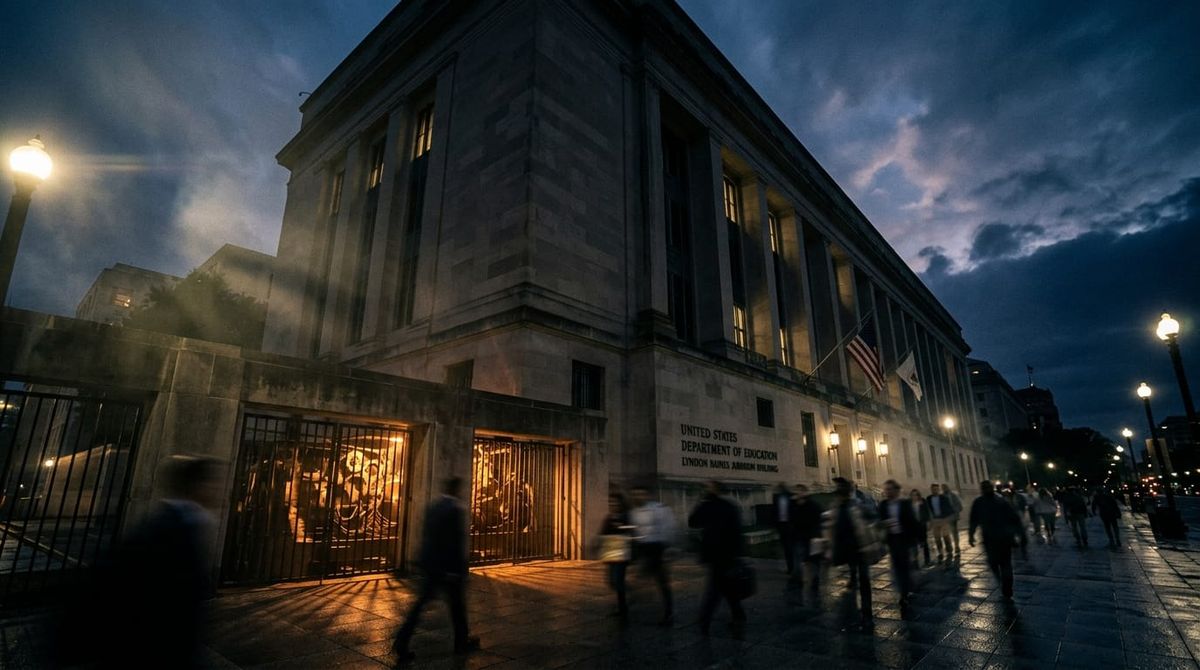
I have watched debt crises unfold across four decades. The underlying mechanics never change.
A central government extends credit without underwriting. Borrowers take on debts they cannot service. A temporary pause—always politically convenient—masks the underlying insolvency. Eventually, the political theater ends, collection machinery reactivates, and the broad financial cascade begins.
Today, that cascade carries a precise number: 9.5 million federal student loan borrowers are in default.
That represents $233.3 billion in dead consumer debt. One in every five federal borrowers has defaulted—forming the single largest default pool in U.S. consumer credit history.
Now, the federal wage garnishment engine is gearing up to seize up to 15% of take-home pay directly from paychecks, alongside tax refund seizures and Social Security offsets.
The financial press calls this a "return to normalcy." The ledger reveals a systemic consumer solvency trap.
Lately, some readers have rightly complained that financial commentary often hides behind overly complex, academic jargon without delivering practical substance. Let's fix that today.
This briefing is not a moral debate about student loans. It is a forensic audit of consumer credit. The core message of this article is simple: A 15% automatic wage garnishment on 9.5 million middle-class households will trigger a immediate second-order wave of defaults in auto loans, credit cards, and regional consumer spending. If your portfolio is heavily exposed to unhedged consumer discretionary stocks or regional bank credit in high-default states, you are holding unpriced downside risk.
Everyone loves to say:
"Oh, I knew about that company before it exploded…"
But most people don't.
So when Immersed becomes widely known, most people will have missed the Spatial Computing darling sitting at the center of a $1 trillion market, one that’s completely rethinking how 32 million remote workers do their jobs, replacing cluttered desks with a virtual office you wear.
You can still get in, though. But not for long.
This isn't just another startup with a shiny pitch deck.
This is:
- 1.5M+ real users
- Runs on Apple, Meta AND Samsung hardware
- AI agent (Curator) already live
- Visor headset already shipping
- 9,500+ investors already in
- Pat Gelsinger, Mark McClain, and Tim Tebow invested
- NASDAQ ticker $IMRS secured
And now? This round is open to all investors.
So invest now, and when someone says they "knew about Immersed before it went public"…
You'll be able to say: "Yeah, I invested."
Round closes July 30
Disclaimer: Immersed is offering securities through the use of an Offering Statement that has been qualified by the Securities and Exchange Commission under Tier II of Regulation A. The valuation is set by the Company and there is currently no public market for the Company's Common Stock. Please read the offering circular and related risks at invest.immersed.com. Nasdaq ticker “IMRS” has been reserved by Immersed and any potential listing is subject to future regulatory approval and market conditions.
I. The Anatomy of a Manufactured Default Wave
Let’s look directly at the timeline. The mainstream media claims this wave is caused by irresponsible borrowers. The Federal Reserve's own data tells a completely different story.
When the pandemic payment pause ended and the one-year grace period expired in late 2024, borrowers were dropped back into a broken servicing infrastructure. Under federal rules, nine months of missed payments trigger a formal default status.
Nine months after the grace period ended, the defaults arrived exactly on schedule:
                 THE CONSUMER DEFAULT ACCELERATION (2025–2026)

Q4 2025 (NY Fed Log):                   ~1.0 Million New Defaults
Q1 2026 (NY Fed Log):                   +2.6 Million New Defaults
Spring 2026 (Education Dept Data):      9.2 Million Cumulative Defaults
July 2026 (Current Official Record):    9.5 Million Cumulative Defaults
ON THE CLIFF (181–270 Days Delinquent): 870,000 Borrowers Pending Default
Here is the critical detail buried beneath the headline numbers: roughly 30% of these new defaulters were fully current on their payments before the 2020 pause began.
These were not chronic non-payers. These were middle-class workers who entered a government freeze and emerged into a chaotic system with shuffled loan servicers, lost paperwork, and soaring cost-of-living inflation.
Furthermore, the New York Fed reports that the median defaulter is 39 years old—a mid-career worker struggling with mortgage, childcare, and everyday living costs—not a 22-year-old recent graduate.
And the wave has not peaked. Right now, 870,000 additional borrowers sit between 181 and 270 days delinquent. That is the final stage before formal default. They represent the next incoming wave.
II. The Garnishment Engine and Regional Credit Vulnerability
Unlike private lenders who must sue a borrower in court to seize wages, the federal government acts as lender, judge, and collector simultaneously.
Once an account moves to the Default Resolution Group, administrative wage garnishment allows the state to automatically deduct up to 15% of disposable pay straight from an employee’s paycheck—without a court order.
When you remove 15% of net income from millions of households already struggling with inflation, those households do not stop eating. They stop paying secondary debts.
A July 2026 survey by The Institute for College Access & Success (TICAS) revealed that 42% of active borrowers are actively trading off between loan payments and basic necessities. FICO data confirms that average credit scores dropped in 2025 and 2026 as credit card balances surged to cover the shortfall.
             REGIONAL STUDENT LOAN DEFAULT SEVERITY MATRIX

JURISDICTION         DEFAULT RATE    PRIMARY SYSTEMIC EXPOSURE

Puerto Rico          30.9%           Severe Consumer Debt Contagion
Mississippi          28.3%           Regional Bank Credit & Auto Defaults
Louisiana            24.7%           Retail Discretionary Compression
Alabama              23.1%           Subprime Auto Loan Stress
West Virginia        22.8%           Local Housing & Consumer Credit Drop
Notice the geographic concentration. The default wave is heavily concentrated across the American South and Rust Belt, where median household incomes are already stretched.
In states like Mississippi, Louisiana, and Alabama, where nearly 1 in 4 borrowers is in default, an automatic 15% wage garnishment will instantly drain local consumer purchasing power, triggering immediate stress in auto loans, credit card portfolios, and regional retail sales.
III. The "Human Capital" Fallacy
Policy institutes often defend student debt by claiming it is not "real" debt, but rather an "investment in human capital" that guarantees higher lifetime earnings.
The data obliterates this thesis.
If federal student loans reliably generated productive earning power, we would not see 9.5 million degree holders in default, nor would 33% of borrowers from for-profit institutions be delinquent.
The student loan framework operates as a federally guaranteed revenue pipeline for higher education institutions. Universities receive 100% of their tuition cash upfront on day one. The long-term solvency risk is dumped entirely onto the borrower and the taxpayer.
The borrower is left holding non-dischargeable debt, while the university uses the upfront capital to expand administrative overhead and physical campuses.
The Useful Message: When a $1.7 trillion debt structure fails to generate the income required to service itself, it ceases to be an asset class. It becomes a permanent tax on consumer velocity.
IV. The Fiduciary Blueprint: Protecting Capital from the Consumer Cascade
As an investor, your goal is not to debate social policy; it is to protect your capital stack from second-order credit shocks.
The restart of federal garnishments will act as an immediate liquidity drag on broad consumer credit. Here is how to insulate your portfolio:
1. De-Risk Regional Financials and Unhedged Consumer Credit
Reduce exposure to regional banks and specialty consumer lenders with high loan concentrations in the Deep South and Rust Belt states. As wage garnishments drain 15% of net pay from millions of households in these areas, auto loan delinquencies and credit card charge-offs in these zip codes will accelerate through Q3 and Q4 2026.
2. Pivot Away from Mid-Tier Consumer Discretionary Equities
Avoid retailers and casual dining chains that cater heavily to middle-income families aged 30 to 45. This demographic carries the highest concentration of resumed student debt payments and impending garnishments. Their discretionary margin has effectively been wiped out.
3. Deploy Systematic Covered Call Overlays
If you choose to hold broad-market consumer equities, sell covered call options against those positions. Rising consumer credit stress will increase equity market volatility over the next two quarters. Writing covered calls allows you to harvest elevated option premiums, providing a buffer against stock price declines.
4. Secure Non-Debt Sovereign Assets
Insulate your core wealth stack from systemic consumer credit decay. Physical gold held outside the commercial banking system, alongside Bitcoin maintained strictly in self-custody, remain completely immune to consumer credit defaults, wage garnishments, and central bank bailouts. They represent invariant, non-counterparty money.
The garnishment notices are already moving through the system. The 870,000 borrowers on the edge of the cliff will fall into default before the year ends.
Do not rely on federal intervention or political promises to fix household solvency. Look at the ledger, insulate your portfolio from consumer credit contagion, and preserve your autonomy.
The math remains absolute. Position your capital stack accordingly.
Comments ()