
Gaza's Governance Vacuum: What Sovereign Investors Must Understand Now
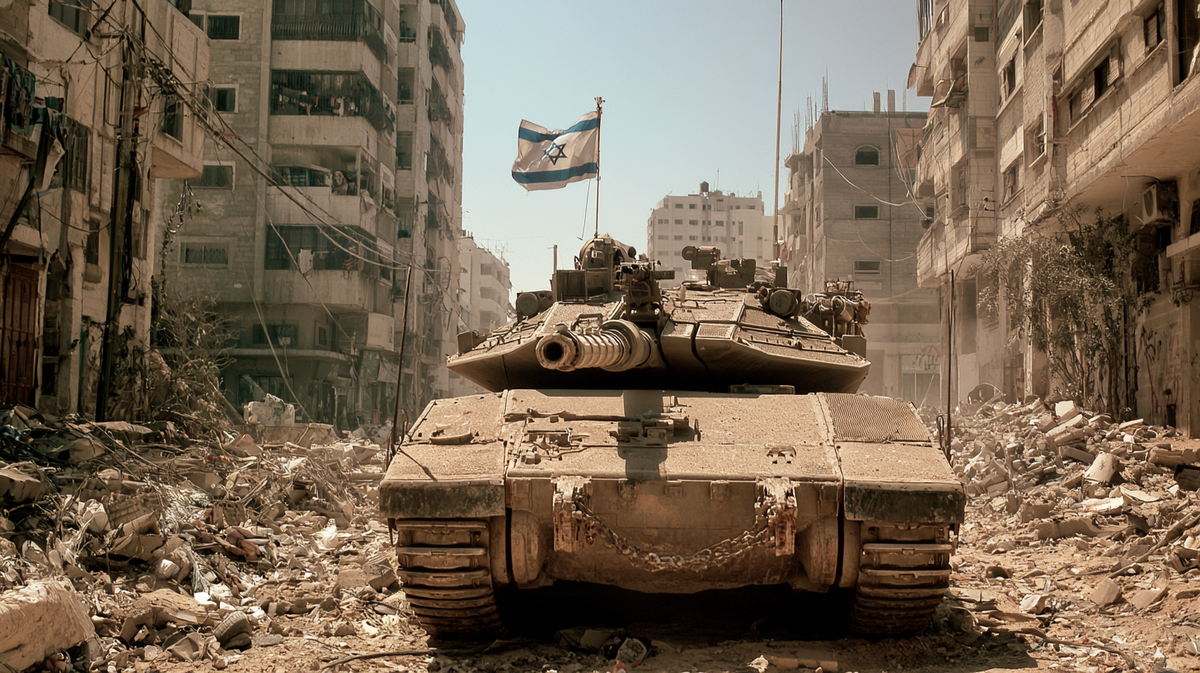
Every empire displays systemic decay within its governance architecture long before the currency confirms it. Geopolitical fault lines crack first.
The regional balance sheet collapses second. We are witnessing the opening act of this Middle Eastern repricing today. Yet, most capital owners remain entirely paralyzed by financial blindness.
On Monday, July 6, 2026, Hamas announced the dissolution of its primary administrative body in Gaza. The establishment press heralds this as progress. The U.S. State Department calls it a “historic turning point.”
Strip away the noise. What materialized is a calculated diplomatic maneuver designed to mask a permanent holding pattern.
Thanks for reading The Fiduciary Archive! Subscribe for free to receive new posts and support my work.
I. The Anatomy of a Dissolution That Changes Nothing
Let the archival record speak without institutional comfort.
Hamas officially dissolved its Government Emergency Committee, led by Mohammed al-Farra. This apparatus directed Gaza’s ministries, civil services, and internal security since 2007. Hamas declared total readiness to cede control to the National Committee for the Administration of Gaza (NCAG).
The establishment calls this a geopolitical breakthrough. The ledger reveals an empty gesture.
The NCAG is a 13-member technocratic panel established in January 2026 under the Board of Peace. This board was engineered in late 2025 under executive U.S. direction following the October 2025 ceasefire. It remains monitored by diplomat Nickolay Mladenov.
The math remains absolute. The NCAG currently resides in Cairo, physically unable to enter the territory it is mandated to govern.
Concurrently, Hamas retains its underlying operational architecture. Approximately 40,000 civil servants and 10,000 security personnel remain entirely under its existing chain of command. The structural core remains untouched.
History is an unyielding teacher. Besieged factions routinely offer nominal administrative concessions while preserving their physical leverage. We observed this with the PLO in 1988 and Hezbollah’s parallel state in Lebanon. The form shifts; the substance is constant.
Israel’s foreign ministry dismissed the announcement as a publicity stunt. They demand absolute compliance with the primary 20-point framework—specifically, complete disarmament.
The Board of Peace delivered a cold assessment, stating that its validation will be guided strictly by actions, not promises. They re-emphasized the core paradigm: one authority, one law, and one weapon. That benchmark is entirely unmet.
The transition conditions do not exist. The international security architecture has failed to materialize. The NCAG possesses no operational mechanism to cross the border, let alone govern.
This is the fiduciary reality: a governance vacuum has been officially codified, not resolved.
II. The Ceasefire Is Broken at Its Core
To comprehend the systemic risk to your portfolio, analyze the structural design of the October 2025 ceasefire framework.
The executive 20-point plan was engineered in sequential phases. Phase one established a temporary cessation of hostilities. Phase two mandated absolute Hamas disarmament and the transition of authority to the NCAG. Phase three envisioned regional reconstruction capitalized by foreign investment.
The framework has stalled permanently at the initiation of phase two.
The intensity of the campaign has shifted, but the underlying conflict persists. The Israeli military currently maintains physical control over 60% of Gaza’s territory. The mandated international peacekeeping force has failed to materialize.
The core disputes—absolute disarmament versus sovereign withdrawal—remain entirely irreconcilable.
The establishment frames this stalemate as ongoing diplomatic negotiations. The ledger reveals a terminal deadlock.
This is a systemic trap of the highest order. The Middle East remains the structural pivot of global energy transit and maritime shipping corridors. It anchors Western foreign policy focus.
Every hour consumed by regional stasis subtracts from the capacity to manage adjacent sovereign vulnerabilities. This directly moves energy prices, defense spending, and insurance premiums on sea trade.
Recent intelligence regarding forced migration infrastructures near Rafah indicates escalation, not pacification. The administrative dissolution was a preemptive maneuver to shift global diplomatic pressure back toward international arbiters.
The handoff is executed in name only. The reality on the ground remains entirely static.
III. The Pressure Matrix and Its Market Shadow
Hamas did not execute this administrative shift out of diplomatic goodwill. It acted because its external pressure matrix has fundamentally fractured.
First, regional state backers are actively prioritizing independent survival math. Tehran is pursuing direct bilateral engagements with Washington, focusing on parallel ceasefires for Hezbollah. The strategic center of gravity has shifted away from underwriting localized resistance.
Second, regional Arab states are accelerating economic integration. The broader Abraham Accords framework remains the dominant macro force. Defiance risks absolute financial and diplomatic isolation.
Third, the military reality on the ground is absolute. The dissolved committees were already structurally hollowed out. This is not an initiative born of strategic strength; it is a tactical retreat dressed as an administrative concession.
The historical archive contains the exact analog. In 1993, the PLO signed the Oslo Accords from a posture of total fiscal and structural exhaustion. The concessions were historic on paper, yet entirely hollow in substance. The Palestinian Authority governed in name; the structural status quo deepened in fact.
For sovereign investors, this matrix introduces an unhedged layer of market fog. The conflict is not resolving; it is transitioning into a managed vacuum.
This is the most dangerous environment for capital pricing. It cultivates the illusion of geopolitical equilibrium while maintaining every macro trigger for escalation.
IV. The Fiduciary Imperative: Protect Capital in a Governance Vacuum
I do not offer speculative forecasts. I deliver defensive blueprints derived from repeating historical cycles. The current volatility demands an uncompromised defensive posture.
First, reject the establishment narrative of diplomatic resolution. The corporate media will dissect the semantics of this dissolution for quarters. The analytical reality is simple: the conditions for a functional transition do not exist. Position your capital for permanent regional friction.
Second, acknowledge the systemic drain on foreign policy bandwidth. Executive leadership is simultaneously managing regional stasis, energy corridor protection, and shifting global alliances. This structural overextension diminishes the capacity to insulate Western markets from adjacent credit events.
“Our assessment will be guided by actions, not promises.” — The Board of Peace, July 6, 2026
This clinical diagnostic from the primary monitoring body confirms that the framework is failing. The fiduciary response requires constructing a capital stack entirely independent of institutional peace processes.
Tangible assets—physical gold, productive land, and self-custodied Bitcoin maintained strictly as a sovereign reserve asset—require no functional governance committee to preserve their intrinsic purchasing power.
Concurrently, systematic covered call execution transforms persistent market anxiety into immediate, predictable cash flow. Spreading capital across independent legal jurisdictions via robust offshore trusts remains mandatory to mitigate escalating domestic fiscal claims.
The math remains absolute. Governance vacuums are the default state of the modern macro landscape. The sovereign allocator protects the base before the repricing occurs.
Comments ()