
The Ankara Doctrine: $570 Billion in Allied Defense Spending and the Fiscal Trap It Conceals
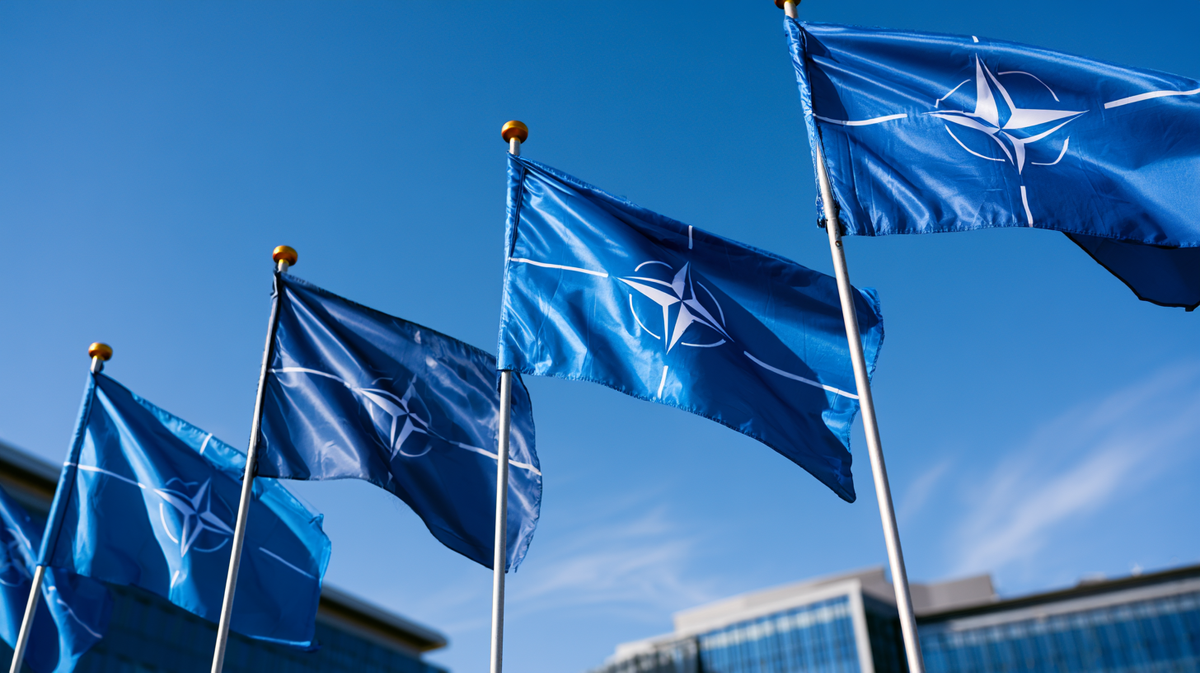
Every empire displays systemic decay within its governance architecture long before the currency confirms it. Sovereign balance sheets and international treaties crack first.
The national fiat currency collapses second. We are witnessing the opening act of this macroeconomic repricing today. Yet, most capital owners remain entirely paralyzed by financial blindness.
Thirty-two heads of state assemble in Ankara this week. The establishment press heralds this as unity. The financial ledger reveals a terminal fiscal trap being sealed in real time.
NATO’s entire roster has officially cleared the 2% GDP defense threshold. Concurrently, the operational goalpost was accelerated to 5%. The core query is no longer about collective security. It is about who absorbs the bill.
The answer remains unyielding. The sovereign holder of fiat currency pays every single time.
Strip away the flags and the superficial diplomatic handshakes. What remains is a massive institutional claim on Western sovereign balance sheets. The passive investor ignores this macro signal at extreme personal cost.
I. The Milestone That Moved Before the Ink Dried
Let the archival record speak without institutional comfort.
NATO Secretary General Mark Rutte confirmed that European allies and Canada expanded defense expenditures by $90 billion in 2025, driving the aggregate total past $570 billion. All thirty-two sovereign members have reached the 2% of GDP allocation metric. Mainstream media markets this as a monumental victory.
History is an unyielding teacher.
The 2% metric was never a terminal ceiling. It was an institutional ratchet mechanism.
At The Hague Summit in June 2025, alliance leadership quietly committed to a 3.5% GDP baseline for conventional military hardware, supplemented by a 1.5% GDP mandate for cyber-warfare layers.
The actualized operational target is now 5% of GDP by 2035. Comprehensive updates from the Ankara summit confirm this fiscal reality.
The combined Gross Domestic Product of the European Union hovers near $18 trillion. A 5% structural allocation commands $900 billion annually for military capital expenditure.
With current spending at $570 billion, the structural deficit is $330 billion per year. This capital will not be drawn from fiscal surpluses. Average Eurozone debt-to-GDP ratios already exceed 80%. Sovereign balance sheets in France, Italy, and Spain sit significantly above 100%.
The math remains absolute.
This structural vacuum will be liquidated through aggressive taxation, severe austerity, or unhedged sovereign debt issuance. The corporate narrative bubbles this up as duty. The archive identifies it as a direct wealth transfer from savers to the military-industrial complex.
Turkish Defence Minister Yasar Guler confirmed that the Ankara directives explicitly aim to scale the transatlantic defense complex. This is code for locked-in, multi-decade procurement contracts that bind future administrations.
Poland and the Baltic states function as macro signals, aggressively pushing their allocations past 4% of GDP. This applies maximum pressure on Germany, France, and the UK to comply.
Strip away the noise. Ankara does not codify a regional defense strategy. It codifies a permanent institutional claim on national output backed by monetary debasement.
II. The Transatlantic Shift: Who Pays When Washington Steps Back
The secondary layer of the Ankara doctrine involves structural burden sharing. Management states that Europe must assume primary conventional defense responsibilities as Washington executes a strategic retrenchment.
In clinical terms: the American defense umbrella is retreating. Europe must absorb the funding gap independently.
This is not speculative guesswork. European leadership has arrived in Ankara to resolve outstanding trade and geopolitical friction with U.S. President Donald Trump regarding Iran and Greenland tariff threats. They are actively demonstrating fiscal compliance as Washington minimizes its continental exposure.
The historical macro pattern is precise. Post-1945 architecture allowed Europe to construct sprawling welfare programs while keeping defense budgets artificially depressed. The United States underwrote the security ledger.
That Cold War anomaly has officially expired. The bill has been delivered.
Replacing American hardware demands comprehensive industrial reconstruction. It requires automated fabrication loops, localized supply networks, and massive logistics hubs. This is a multi-decade capital drain competing directly against sovereign pension obligations, healthcare networks, and debt servicing.
The sovereign bond market recognizes this structural decay even if equity markets remain blind. European yields have moved steadily upward for eighteen months.
The German Bund, historically the pristine risk-free asset of the continent, now carries duration risk that was mathematically unthinkable in 2019. French sovereign bonds trade at spreads reflecting acute fiscal volatility. Italian debt remains a permanent systemic threat.
The establishment markets Ankara as a showcase of allied unity. The institutional ledger reads it as a binding guarantee to issue trillions in new sovereign debt over the next decade.
Only the ledger matters to your private wealth. European sovereign debt is no longer a defensive asset class. It is the core mechanism funding an open-ended rearmament cycle with zero capital restraint. Every major rearmament in modern history—1930s Europe, Cold War America, post-9/11 spending—ended with bloated state balance sheets, weak currencies, and real wealth flowing from savers to the state.
The fiduciary reality is stark. If your private capital remains denominated in euros, sterling, or dollars, you are holding the short side of a massive macro rebalancing.
III. The Defense-Industrial Complex: Follow the Contracts, Not the Speeches
Procurement contracts valued at tens of billions of dollars are being finalized in Ankara. This transactional matrix is the absolute economic core of the summit.
Strip away the geopolitical theater. What remains is a procurement cycle of unprecedented scale. NATO’s thirty-two members are locking in multi-decade purchasing agreements that insulate defense contractors from future electoral shifts or economic downturns.
The corporate defense complex is operating at absolute peak capacity. Monoliths like Lockheed Martin, BAE Systems, Rheinmetall, Leonardo, and Thales did not merely anticipate this surge; their institutional lobbying architecture actively engineered the treaty floors.
The methodology is elegant in its ruthlessness. Establish an initial soft target like the 2% Wales mandate in 2014. Utilize a regional security crisis to make compliance legally binding.
Once compliance is normalized, elevate the benchmark to 5% as executed at The Hague. Finally, institutionalize the new baseline through unyielding long-term contracts at Ankara.
History is an unyielding teacher. The American military budget never normalized to pre-World War II levels after 1945. It failed to recede after Korea in 1953, Vietnam in 1975, or the post-9/11 expansions. The institutional ratchet mechanism only turns in one direction.
Europe has officially entered this terminal spending loop. The $570 billion deployed today represents a structural floor, not a cyclical peak. The path toward a $900 billion annual mandate is already mathematically codified.
For the sovereign allocator, the structural implications disrupt every liquid asset class.
Equities: Defense sector valuations will command premiums for years as state capital liquidity flows directly into corporate balance sheets. However, smart money captured this entry point in 2022; chasing late-cycle allocations carries distinct valuation risk.
Bonds: European sovereign credit will systematically degrade. Military debt issuance will actively crowd out infrastructure, energy transformation, and social capital funding. Yields must rise; bond values must collapse.
Currencies: The euro faces permanent debasement. The European Central Bank will inevitably be forced to monetize sovereign debt issuance that the private market refuses to absorb. This repeats the exact Federal Reserve playbook deployed from 2008 through 2022.
Hard Assets: Physical gold, productive agricultural land, and self-custodied Bitcoin become the only rational instruments to hedge against a global fiat complex dedicated to funding a permanent arms race.
IV. The Fiduciary Mandate: Placing Capital Against the Rearmament Cycle
The Ankara summit is not a strategic military convention. It is a monetary event dressed in operational camouflage.
Every pledge ratified this week translates directly into an unhedged claim against sovereign balance sheets. This infrastructure will be funded through debt expansion, monetized by central banking systems, and liquidated via the purchasing power of fiat currency.
The macroeconomic cycle is ancient. Rome clipped its silver denarius to finance its legions. Spain systematically debased the real to underwrite the Armada. Britain compromised the pound sterling to survive consecutive world conflicts. The United States diluted the dollar to capitalize interventions across Korea, Vietnam, and the Middle East. Europe has now initiated the exact same self-destructive loop.
The systemic result is immutable. The state expands; the currency degrades. Real capital shifts from paper instruments to tangible assets.
The fiduciary blueprint requires clinical execution, entirely free from speculative market timing.
First, eliminate concentrated fiat currency exposure. If your net worth resides entirely within Eurozone or Anglo-American banking infrastructure, you are voluntarily financing this rearmament. Reallocate toward physical assets immune to state printing presses: physical gold held entirely outside legacy institutions, arable land with clean title, and Bitcoin maintained in absolute self-custody.
Second, monetize systemic volatility via covered call strategies. The structural rebalancing will induce prolonged turbulence across European equity complexes. Systematically writing covered calls against broad indexes or liquid defense ETFs converts macro anxiety into predictable, immediate cash flow while defining absolute exit thresholds.
Third, execute geographic asset insulation. The fiscal strain of the 5% GDP mandate will inevitably force aggressive domestic tax adjustments across NATO jurisdictions. Constructing robust offshore trust architectures in resilient legal frameworks—such as Singapore, New Zealand, or select Caribbean zones—provides verified distance from state claims.
Fourth, prioritize personal and cognitive autonomy. This structural reallocation will grind across a multi-decade horizon. Cognitive clarity and independence from highly centralized, dependency-driven healthcare systems are strict tactical requirements. True capital preservation requires total self-reliance.
The state never rearms temporarily. Every defense buildout in the modern archive has resulted in permanent institutional expansion. Position your capital for that unyielding reality.
The corporate press will continue to broadcast narratives of unity, collective defense, and shared values. Those strings are manufactured for public consumption.
The underlying data points—$570 billion escalating toward $900 billion, a 5% GDP structural mandate by 2035, and tens of billions in locked-in corporate procurement—are written directly onto the balance sheet.
The establishment will never explicitly inform you that your private wealth is funding this architecture. The financial ledger already has.
Your fiduciary obligation is absolute: protect your private capital stack, secure systemic autonomy, and step completely outside the blast zone of the largest peacetime fiscal expansion in Western history.
The math remains absolute. Act accordingly.
Comments ()