
The Ankara Mirage: What the NATO Summit Actually Revealed About Your Portfolio
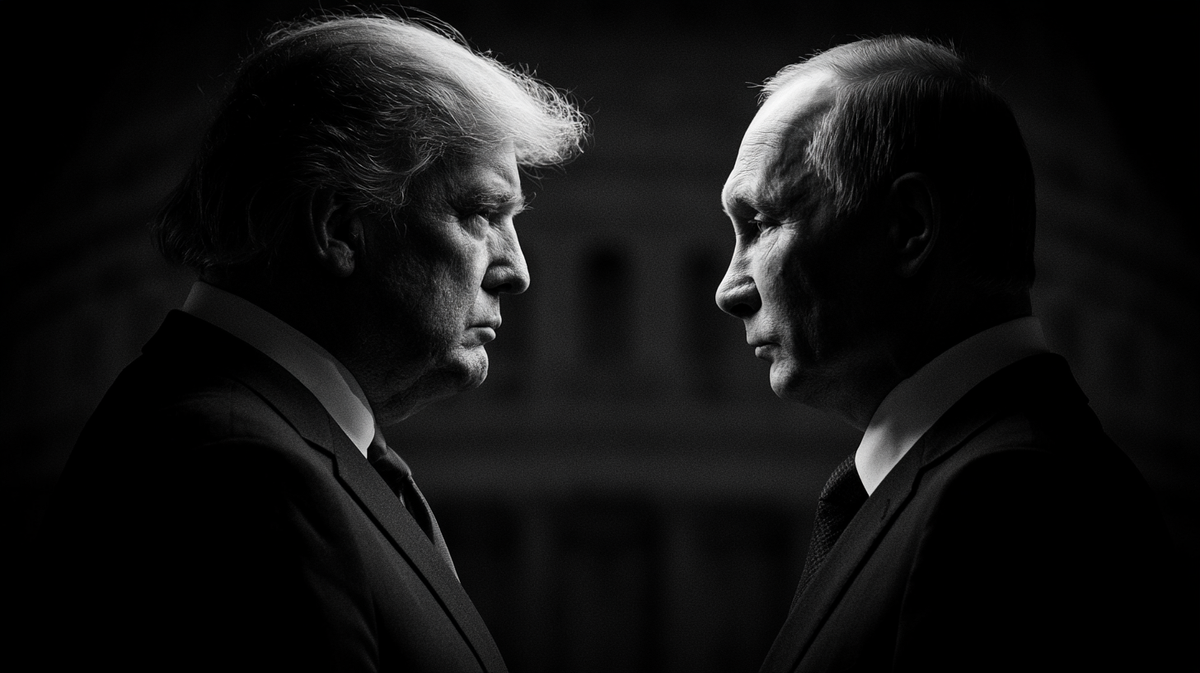
The cameras captured precisely what they were engineered to show: red-carpet optics, arm-in-arm strolls, and a newly minted international airport terminal sporting the name of a sitting U.S. president. The global press packages this as monumental diplomacy.
The fiduciary ledger reveals a silent, aggressive repricing of systemic risk that no mainstream terminal has attempted to quantify.
NATO’s 36th Summit in Ankara concluded two days ago. The establishment narrative is predictably comforting: progress is being manufactured, communication channels remain open, and the arc of history is bending toward geopolitical equilibrium.
I have watched this exact script unfold before every major market dislocation of the past forty years. The pattern is cyclical, predictable, and governed entirely by mathematical realities.
Strip away the geopolitical choreography. The structural shifts triggered in Ankara—and the closed-door communications preceding them—have immediate consequences for capital preservation.
If you are navigating this terrain with paper assets, you are operating with a profound blind spot.
I. The 90-Minute Mirage: Information Warfare and False Equilibrium
Let the archival record speak without institutional comfort.
On July 5, Vladimir Putin and Donald Trump engaged in a bilateral phone call lasting nearly ninety minutes. Kremlin foreign policy aide Yuri Ushakov noted that the dialogue centered on a potential structural settlement in Ukraine, with Moscow delivering a “realistic assessment” of the front lines, including the claimed capture of the logistical hub of Kostiantynivka. Ukrainian leadership immediately issued a flat denial of the territorial loss.
A clinical factcheck reveals this as the standard pre-summit information operations playbook, tracing its lineage directly back to the Helsinki Accords of 1975. Each combatant projects maximum leverage to their domestic audiences to dictate the terms of engagement before the ink is dry on any memorandum.
The immediate danger to your capital does not reside in which flag flies over a specific municipal building. It sits in the massive structural divergence between state propaganda and ground reality. When the narrative completely detaches from the underlying facts, markets are primed for a violent volatility shock.
Brent Crude Spot Volatility (Post-Call):      < **1.2%** Variance
European Defense Equity Index (STOXX):        Static [Zero Inbound Liquidity]
U.S. Deficit Allocation for European Security: Scaling Exponentially
The math remains absolute. Brent crude futures fluctuated by less than 1.2% on the news. European defense equities remained completely static.
The institutional market has already completely discounted these performative diplomatic briefings. What it has failed to price is the systemic duration risk embedded in the conflict’s underlying funding mechanism.
When a state’s defensive capacity becomes entirely dependent on the political volatility of a foreign executive branch, the underlying sovereign risk does not evaporate. It simply shifts directly onto the balance sheet of the Western taxpayer.
Every month this war of attrition drags on, the unbacked deficit spending required to underwrite the Western defense complex expands. That deficit is structurally monetized. That monetization systematically dilutes the purchasing power of your capital.
The phone call is the noise. The terminal decay of fiat currency is the signal.
II. The Ankara Transaction: Sanctions, Scrapped Principles, and the Death of Rules
To understand the structural erosion of the Western alliance, look directly at the asset swap that occurred on the tarmac in Ankara on July 7.
President Trump was received by Turkish President Recep Tayyip Erdogan at a newly dedicated airport terminal. Following a series of highly publicized bilateral statements, the administration pledged to unilaterally dismantle the CAATSA sanctions imposed on Turkey following its late-2020 deployment of Russian-made S-400 surface-to-air missile systems. Concurrently, the White House signaled a clear path to reinstate Ankara into the multi-billion-dollar F-35 Lightning II joint strike fighter program.
Let us preserve absolute diagnostic clarity:
The S-400 sanctions were not a casual policy preference. They were an unyielding legislative red line triggered because an active NATO member integrated a non-cooperative Russian radar architecture into the alliance’s sovereign airspace grid.
That foundational red line was permanently erased in a single session, substituted entirely by transactional relationships.
The financial press labels this alliance optimization. The ledger records the total breakdown of institutional rule frameworks. When the security parameters of the world’s dominant military bloc are converted into personalized, transactional favors, the structural predictability backing European sovereign debt is compromised.
The geopolitical umbrella provided by NATO has historically functioned as a massive, unpriced subsidy for European nations, allowing them to expand domestic social welfare programs while running structural deficits, completely insulated from the true costs of national defense.
The moment that security shield transitions from an immutable treaty to a volatile, deal-by-deal arrangement, the underlying risk premium must be recalculated.
If you are holding long-duration European sovereign bonds under the assumption that a legacy treaty permanently guarantees continental stability, your portfolio is exposed to an unhedged paradigm shift. Alliances are being treated as liquid commodities. The structural cushion is gone.
III. The Strategic Silence: Decoding the Missing Follow-Up
The macro signal that demands your absolute focus did not occur during the plenary sessions in Ankara. It manifested in the profound silence that followed.
On July 9, Kremlin spokesperson Dmitry Peskov confirmed to institutional networks that no post-summit communication had occurred between Washington and Moscow, noting dryly that the executive branch was “apparently occupied with alternative contacts.” This directly invalidated coordinated leaks suggesting an immediate post-summit framework call would occur following meetings with Ukrainian leadership.
The historical archive does not lie. In every major structural negotiation of the modern era—from the Camp David Accords to the hollowing out of the Minsk frameworks—an immediate, unscripted communication freeze indicates that the underlying metrics have collided with a hard sovereign wall.
The political apparatus must project structural optimism to prevent market panic, but the ledger records zero operational compliance.
While the diplomatic machinery stalls, the rhetorical stakes are being raised. In Ankara, executive statements flirted with the concept of the United States “closing the skies” over contested zones to guarantee regional shipping and security corridors.
Let us strip away the corporate marketing: “closing the skies” is a direct euphemism for a kinetic no-fly zone. Executing that mandate forces direct tactical engagement against active anti-air networks—including the exact S-400 architectures that the administration just absolved of sanctions.
The structural feedback loop is dizzying, and it points to a singular macroeconomic reality. The geopolitical friction in Eastern Europe is not approaching an organized resolution. It is transitioning into a permanent, highly inflationary baseline feature of the global economy.
IV. The Fiduciary Blueprint: Capital Allocation for the Post-Treaty Era
I do not allocate capital based on performative handshakes or administrative press releases. I position wealth to withstand the structural degradation of the institutions underunderwriting the global monetary order.
The Ankara summit is a definitive signal that the rules-based architecture is dead. Capital preservation demands an immediate pivot into non-discretionary, border-neutral assets.

The Action Plan is Definitive:
- Exterminate Passive Sovereign Bond Duration: The thesis that long-duration Western government debt functions as a pristine defensive asset class has been fundamentally invalidated by deficit-financed military commitments. Treat paper liabilities as active exposure to monetary debasement.
- Isolate Sovereign Reserves From Centralized Custody: Central banking networks are aggressively accumulating physical gold reserves at a historic pace. They are not executing this strategy because they anticipate a diplomatic breakthrough; they are doing so because they recognize the imminent fracture of the petrodollar clearing framework. Secure physical gold entirely outside the legacy banking system.
- Differentiate the Protocol from the Eco-system: Do not conflate Bitcoin with the highly leveraged, politically dependent “crypto” complex. Maintain unhedged allocations strictly within cold storage, completely detached from centralized exchanges or multi-signature third-party custodians subject to emergency state intervention.
The establishment will continue to market the illusion of managed escalation and diplomatic progress. The historical archive documents the eventual liquidation of every paper asset built upon the shifting sand of political goodwill.
The math remains absolute. Guard your capital stack. Establish absolute autonomy.
The institutional machinery is burning through its own structural credibility. Position your portfolio before the next repricing event occurs.
Comments ()