
The Declassification Spectacle: What the Establishment Doesn't Want You to Calculate
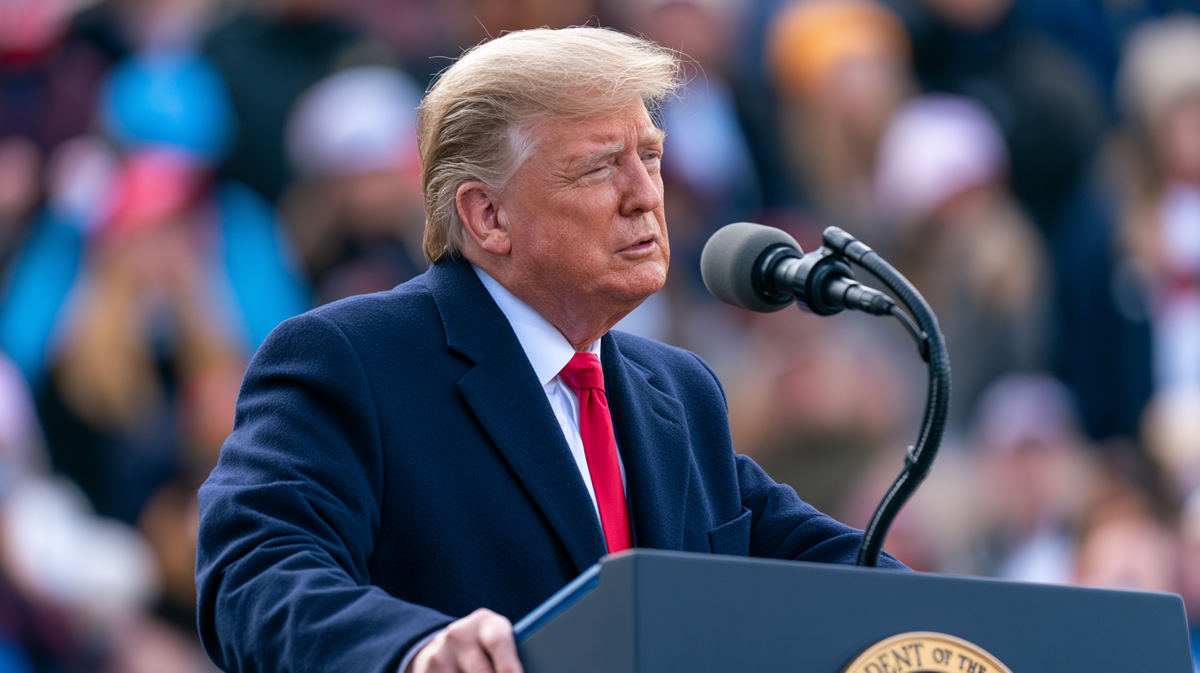
Last night, the President seized primetime television, accusing China of orchestrating "the largest compromise of election data in history." It was twenty-five minutes of rising rhetorical heat, selectively declassified documents, and warnings of a shadow government hiding Beijing’s meddling. The networks carried it wall-to-wall. Social media exploded exactly on cue.
Yet, one critical fact sat completely buried beneath the sensational headlines. Presidential task force member John Solomon admitted directly on camera that the intelligence community still has "zero evidence that a foreign power flipped a single vote" in the 2020, 2022, or 2024 election cycles.
Strip away the noise.
What you watched was not an objective intelligence briefing. It was a calculated political maneuver. A 109-day countdown clock is ticking toward the midterm elections. If you manage your own capital, your only job is to understand what this theater means for the system holding your wealth.
Lately, some readers have rightly complained that financial commentary gets lost in overly complex vocabulary without delivering a clear, useful point. Let’s eliminate that flaw today.
The core message of this briefing is simple: When a government relies on manufactured external threats to wage internal political warfare, it shreds institutional trust. Institutional trust is the hidden collateral that backs the U.S. dollar. When Washington devalues its own credibility for short-term electoral gains, it accelerates the terminal decay of fiat currency. Your only logical move is to exit paper liabilities and secure invariant, non-state assets.
I. The Anatomy of Primetime Declassification: The Reality Behind the Hype
Let the archival record speak with clinical precision. Let's look at exactly what was claimed versus what the data actually shows:
- The Accusation: The administration claimed China compromised 220 million U.S. voter files containing personal identifiable information across 18 states.
- The Regulatory Factcheck: Every experienced data allocator knows that these "220 million files" are not highly classified national security blueprints. They are standard demographic databases that are openly sold on the commercial market by data brokers to political campaigns, marketing firms, and public registries every single day.
- The Analytical Consensus: The intelligence community's own historical assessments have consistently concluded that while Beijing conducts cyber espionage, it deliberately avoided trying to alter U.S. election outcomes, judging that the immense geopolitical blowback far outweighed any volatile reward.
The method behind this primetime address is ancient. Whether it is the Gulf of Tonkin resolution, the Iraqi WMD dossiers of 2003, or the sudden panic over voter registries 109 days before a midterm vote, the playbook never changes: declassify selectively, frame aggressively, legislate immediately.
The target of this theater is never the informed analyst. It is the emotional voter. The goal is to manufacture an immediate emergency to justify rapid domestic legislative changes before November.
II. The Geopolitical Paradox: Thursday’s Villain, September’s Business Partner
This is where the political facade cracks completely open.
The exact same White House that just branded China a mortal threat to American democratic sovereignty simultaneously confirmed that the President still plans to meet Xi Jinping for a bilateral summit around September 24, 2026. Secretary of State Marco Rubio vowed to "root out foreign interference," yet the high-level diplomatic calendar remains completely untouched.
Sit with that contradiction. It is the definitive signature of political theater, not structural conviction.
If an administration genuinely believed a foreign superpower had actively compromised the core infrastructure of the republic, the response would not be a twenty-five-minute television address and a new public relations website. The response would be immediate economic sanctions, asset freezes, and aggressive military positioning.
In the real world, when Washington uncovered Russian cyber meddling in 2016, it expelled 35 diplomats and shuttered state compounds within days. In 2026, the response to a "catastrophic compromise" is booking a summit meeting 70 days out.
                 MACRO DATA RE-ANCHORING: THE REAL REEL (2026)

Gross U.S. Sovereign Debt:                   **$39.39 Trillion** (Tracking $40T)
Daily Debt Accumulation Velocity:            +$7.71 Billion / 24 Hours
Gold Spot Consolidation Baseline:            Sustained Above **$4,100 - $4,300/oz**
While the politicians trade verbal blows, the underlying economic friction is driving a real-world decoupling. When the two largest economies on earth use each other as domestic political punching bags, capital naturally panics. It exits equities tied to complex international supply chains and flows directly into tangible, border-neutral assets.
When the tariff and trade wars re-accelerated, gold launched its historic run, shattering the $3,000 baseline. Today, in July 2026, gold is comfortably consolidating in the $4,100 to $4,300 per ounce range.
Gold isn't rallying because of who hacked what voter registry. It is rising because the fiat money system is fracturing in plain sight.
III. The Domestic Smokescreen: Covering the Fiscal Abyss
Now look at the structural reality that no primetime speech will ever mention. The ruling party holds thin majorities. The economic landscape is highly unstable. The state desperately needs a massive, unifying narrative to distract from the catastrophic reality of the federal ledger:
- The Debt Matrix: The U.S. national debt is currently sitting at a staggering $39.39 trillion, growing at an aggressive pace of $7.71 billion every single day.
- The Interest Trap: The annualized net interest expense required just to service this debt has bypassed the entire national defense budget. The Federal Reserve is structurally trapped between persistent inflation and an imminent credit recession.
- The Trust Deficit: The U.S. dollar's global reserve status does not rest on physical commodity backing; it rests entirely on the institutional belief that the American legal and political system is stable, fair, and predictable.
Every time a sitting president goes on television and declares that the national election infrastructure is "catastrophically broken" and accuses his own intelligence agencies of acting as a "criminal shadow government," he is making a massive, unhedged withdrawal from the nation's institutional trust account.
Trust accounts, unlike fiat currencies, cannot be refilled by a central bank printing press. Once the global market realizes that the leadership of the reserve currency empire views its own foundational systems as illegitimate, the premium protecting dollar-denominated paper assets begins to permanently evaporate.
IV. The Fiduciary Action Plan: Capital Preservation
I do not allocate capital based on partisan talking points or state-sponsored spectacles. The ledger demands that you ignore the narrative and position for the structural fallout.
Here is your practical blueprint to protect your purchasing power from Washington’s manufactured volatility:
1. Re-Anchor Your Wealth Core in Physical Gold
Gold’s climb past the $3,000 mark was not a temporary spike; it was a fundamental repricing of fiat currency decay. With the national debt rapidly closing in on the $40 trillion threshold, gold's current consolidation around $4,300 represents a highly attractive entry baseline before the next leg of currency debasement occurs. Maintain physical custody outside the legacy banking system.
2. Execute Strict Self-Custody of Cryptographic Reserves
Do not treat Bitcoin as a speculative tech stock to be traded on a centralized app. Treat it as a non-state, rules-based monetary exit hatch. Maintain your positioning strictly in cold storage, completely isolated from intermediate financial platforms that are vulnerable to emergency capital controls or state interventions during political crises.
3. Harvest inflated Volatility via Covered Calls
Political theater and election panic invariably inflate options premiums across the equity markets. Do not try to speculatively time market tops or bottoms. Instead, systematically write covered calls against your high-quality, cash-flowing corporate equities. This converts macro anxiety into immediate, predictable cash flow while capping your downside exposure.
4. Decentralize Your Legal Jurisdictions
When a sovereign state begins publicly attacking its own domestic infrastructure, the long-term predictability of the domestic rule of law is compromised. Ensure your wealth stack is insulated by utilizing offshore trusts and asset structures across multiple independent legal jurisdictions well before the political friction peaks in November.
The primetime address was a twenty-five-minute theatrical production designed to survive a 109-day election cycle. The structural erosion of the underlying fiscal, monetary, and institutional systems is a multi-decade reality.
Match your capital allocation to the long-term structural clock, not the performative news cycle.
The math remains absolute. Position your capital stack accordingly.
If this briefing delivered distinct, uncompromised value to your capital framework, consider subscribing to The Fiduciary Archive. Structural updates are routed directly to your inbox.
Comments ()