
TSMC's Quarter-Trillion Pledge: Capital Preservation in the Age of Fabricated Narratives
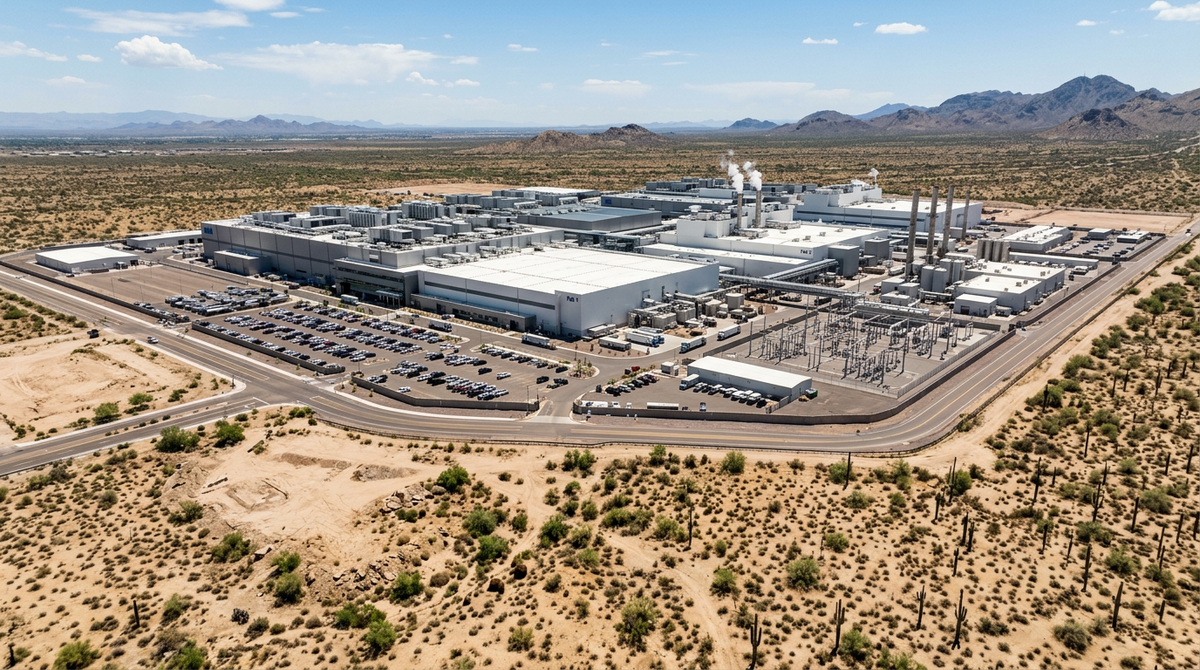
The cameras captured precisely what they were designed to show: a historic reshoring triumph, thousands of high-tech American jobs, and politicians taking victory laps. The mainstream story is simple, patriotic, and neat: American semiconductor supremacy has been restored.
I have watched this exact script play out across multiple industries over the last forty years. The corporate names change, the dollar figures grow, but the economic ending remains entirely unchanged.
Today, July 16, 2026, Taiwan Semiconductor Manufacturing Co. (TSMC) announced an additional $100 billion expansion of its Arizona manufacturing campus. This massive cash injection brings TSMC's total planned U.S. investment to a staggering $265 billion. To support this, the chipmaker raised its 2026 capital spending budget to an astronomical $60 billion to $64 billion.
A few years ago, spending that much cash on factories in a single year would have been laughed out of any corporate boardroom. Today, record quarterly profits (up 77% year-on-year) and the unyielding hype of the "AI megatrend" are used to justify the splurge.
Let's address a common complaint: too many financial writers hide behind overly complex jargon without actually delivering a clear, useful point. I won't do that.
This article is a direct, practical look at the numbers. The core message is simple: TSMC’s $265 billion Arizona buildout is not a victory for investors; it is a massive, politically forced capital trap. It locks major tech companies into higher chip costs, relies on the dangerous assumption that AI demand will never experience a cyclical bust, and represents the political capture of a private enterprise. If your portfolio is heavily exposed to unhedged tech hardware, you are sitting on a structural risk.
I. The Anatomy of a Captive Investment
To understand why this massive capital deployment should alarm you, we must look at the real operational metrics behind the press releases.
TSMC's Arizona footprint is expanding to include 12 facilities, up from the original plans. This expansion is designed to produce 2-nanometer and even more advanced processors to satisfy its dominant American buyers: Apple, Nvidia, AMD, and Tesla.
TSMC ARIZONA: THE ESCALATION OF CAPITAL
Original U.S. Commitment: $12 Billion (2020 Baseline)
CHIPS Act Expansion: $65 Billion (Three Fabs)
March 2025 Revision: $165 Billion (With Lutnick & Trump)
July 16, 2026 Announcement: $265 Billion (Total Planned Capital)
The media calls this a triumph of industrial policy. The ledger records a host of structural challenges that are being swept under the rug:
- The Chronic Delay Cycle: The first Arizona fab was delayed from 2024 to 2025 due to local labor shortages. The second fab slipped from 2026 to 2027 or 2028. Now, during today's earnings call, executives claim they are "moving as fast as possible". The timeline has been revised so many times that it is now a public relations tool, not a reliable operational metric.
- The Permanent Cost Penalty: AMD Chief Executive Lisa Su has stated openly that chips manufactured in TSMC’s Arizona facilities will cost 5% to 20% more than the exact same chips produced in Taiwan. She framed this as a "good investment in supply chain safety." The math frames it as a permanent, locked-in hit to corporate profit margins that will eventually be passed down to the consumer.
- Forced Capital Migration: This expansion is not entirely voluntary. It is the direct result of intense, bipartisan political pressure from Washington. Taiwan's own trade ministry has had to approve six separate rounds of capital outflow—including a massive $20 billion chunk on July 2, 2026—just to fund these high-cost U.S. builds.
When a private company is forced by sovereign states to relocate its highly efficient, centralized manufacturing ecosystem to a higher-cost, politically volatile jurisdiction, the underlying economic efficiency of that business is fundamentally degraded.
II. The Capex Trap and the AI Demand Mirage
The entire justification for spending $265 billion in the Arizona desert rests on a single, fragile assumption: the demand for high-end artificial intelligence chips will grow exponentially, without interruption, forever.
During today's earnings call, TSMC CEO C.C. Wei noted that the massive capital spending hike is a direct response to "strong demand from our leading U.S. customers".
But history is an unyielding teacher when it comes to semiconductor capital expenditure (CapEx) cycles:
| Cycle Period | The Hype Narrative | The Cyclical Reality |
| 1999–2000 | The Dot-Com Internet Revolution | Global CapEx surged past $60 billion, followed by a tech crash that left global fab utilization rates struggling below 70%. |
| 2006–2008 | Global Mobile & Memory Boom | Massive factory buildouts ended in oversupply, leading to a multi-year collapse in memory chip pricing. |
| 2021–2022 | Pandemic Work-From-Home Shortage | Panic-building of legacy nodes created an acute oversupply and price glut by late 2023. |
| 2025–2026 | The Infinite AI Megatrend | TSMC's single-year CapEx rises to $60–$64 billion. Fabs are planned years before the demand can be stress-tested. |
To put TSMC's $60 billion to $64 billion single-year spending budget into perspective, this single corporation is spending more money on factories in 2026 than the entire annual gross domestic product of over 100 sovereign nations.
The AI narrative assumes that tech giants will continue to spend tens of billions of dollars every quarter on massive data centers, without ever facing a budget constraint, a consumer pullback, or an economic recession.
If major tech companies face even a minor slowdown in their AI monetization efforts, they will instantly slash their chip orders.
When that happens, those brand-new, extremely expensive Arizona fabs will not simply disappear. Their massive depreciation costs, heavy maintenance liabilities, and underutilized assembly lines will remain, crushing TSMC's profit margins and dragging down the valuations of the entire tech sector.
The Useful Message: When a cyclical hardware industry begins spending capital at state-level scales based on a single, uncorrected demand narrative, the risk of a massive supply glut is near 100%.
III. The Amkor Deal: A Decennial Risk Lock-In
To secure this political reshoring effort, Washington is actively building a localized ecosystem around TSMC. On June 16, 2026, TSMC signed a historic, first-of-its-kind 10-year agreement with AmkorTechnology.
Under the terms of the deal, Amkor will build a massive, $2 billion advanced packaging and test facility on 104 acres in Peoria, Arizona. Theplant is scheduled to begin production in 2028 and will employ roughly 2,000 workers.
The press presents this as a major milestone for local manufacturing. The ledger identifies it as a long-term risk lock-in.
A ten-year packaging contract is a lifetime in the technology sector. By binding themselves to a local, high-cost U.S. packaging pipeline, both TSMC and Amkor are stripping themselves of the operational flexibility needed to navigate future economic downturns.
They are betting the next decade of their corporate health on the hope that political subsidies will continue to flow and that American-made chips will remain competitive despite their built-in cost penalty.
IV. The Sovereign Playbook: Actionable Wealth Protection
If you are navigating this market with your own capital, do not let the record-breaking earnings beats blind you to the building structural risks.
Here is the exact, practical blueprint to protect your wealth from the coming semiconductor CapEx correction:
1. De-Risk Your Tech Hardware Allocations
The valuations of major chipmakers and hardware designers are currently priced for absolute perfection, assuming infinite growth with zero cyclical downturns.
- The Move: Reduce concentrated, unhedged exposure to high-multiple semiconductor equities. If you choose to hold these positions, systematically deploy covered call structures. This allows you to collect high options premiums driven by the current AI volatility, while establishing strict, predefined price targets to exit before any cyclical downturn.
2. Identify the Cost-Structure Winners
If Arizona-made chips are going to cost 5% to 20% more, the companies that build the physical infrastructure (land, power, cooling systems) are in a far safer position than the hardware manufacturers who must absorb the higher manufacturing margins.
- The Move: Shift capital away from pure hardware makers and toward independent, essential infrastructure plays—such as regulated energy utilities and regional power distributors—that will generate consistent yields regardless of which chipmaker wins the technology race.
3. Hold Invariant, Non-State Assets
The CHIPS Act, the $265 billion in Arizona commitments, and the corporate subsidies are all heavily dependent on political goodwill, deficit financing, and central bank liquidity.
- The Move: Ensure your core wealth stack is anchored in assets that do not require government grants, corporate earnings beats, or complex global supply chains to hold value. Maintain a resilient foundation of physical gold, stored outside of the commercial banking system, and Bitcoin held in absolute self-custody.
The mainstream financial press will continue to run celebratory headlines about the massive Arizona buildout. The historical archive, however, preserves an unyielding reality: every major capital-spending boom in history has ended in a structural correction.
The math remains absolute. Protect your capital stack today.
If this analysis delivered clear, actionable value to your capital framework, consider subscribing to The Fiduciary Archive. Operational macro updates are routed directly to your inbox.
Comments ()