$20 Billion in Canadian Goods Just Got 50% More Expensive. You're Paying — Not Ottawa.
Trade War Capital Audit
50% on Canada: The Tariff Escalation the Archive Has Seen Before — and What Always Happens Next
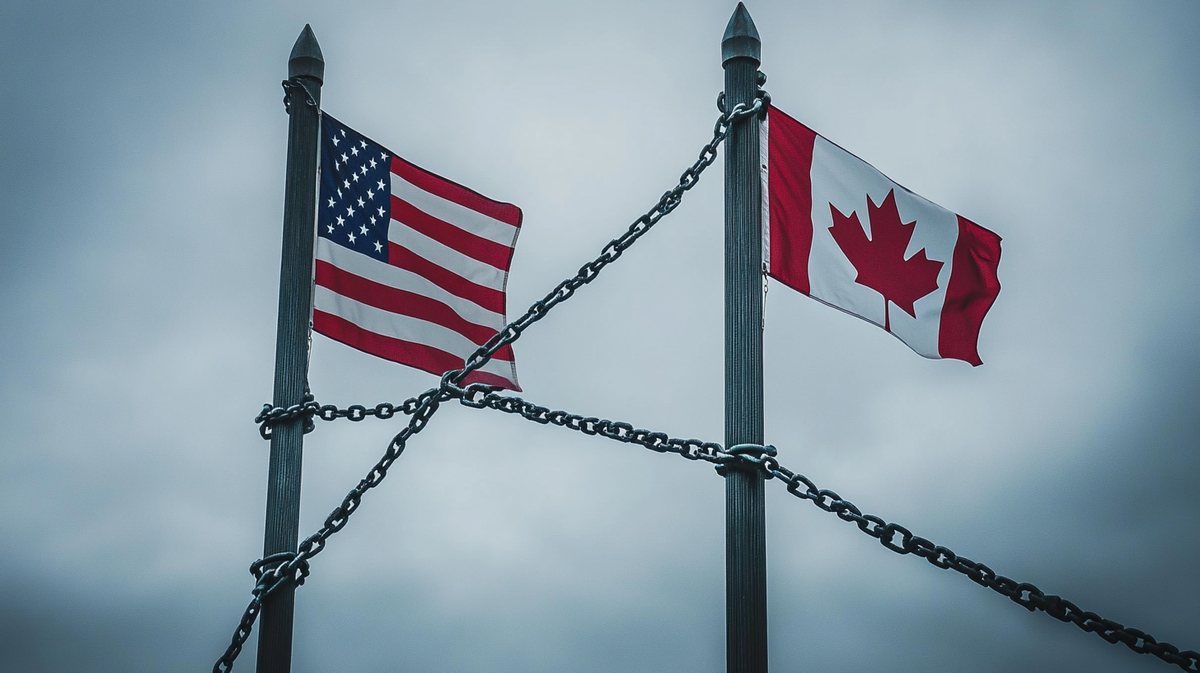
Trade talks between Washington and Ottawa collapsed Friday night. 50% tariffs on $20 billion of Canadian goods took effect at midnight. Carney announced dollar-for-dollar retaliation starting September 8. The Archive has the ledger from every prior cycle. The pattern is not ambiguous.
The sequence was textbook. Three days of negotiations in Washington. Signals of an imminent deal. Trump telling reporters Canadian agricultural tariffs would be "non-existent." Then, at midnight on August 22, 2026, the talks collapsed. The U.S. imposed 50% tariffs on $20 billion worth of Canadian goods — hockey sticks, building materials, steel, liquor, clothing. Prime Minister Mark Carney called it "a miscalculation" and announced Canada would match every dollar starting September 8.
The financial press is treating this as a diplomatic story. The Archive treats it as what it actually is: the third escalation in an 18-month tariff campaign that began at 25% in February 2025, moved to 35% in August 2025, and has now reached 50% on selected categories. The trajectory is not random. It is a documented negotiating architecture with a predictable endpoint — and an equally predictable set of capital consequences along the way.
Canada is America's second-largest trading partner. 72% of Canadian goods exports go to the United States. The two economies are not merely linked — they are structurally embedded. A 50% tariff between them is not a trade policy. It is a cost-of-living tax applied simultaneously to both populations, disguised as a geopolitical lever.
This briefing delivers the full forensic anatomy of U.S. tariff policy: what it has accomplished historically, how every prior Trump tariff cycle resolved, and what the self-directed investor must do before September 8 — when the retaliation phase begins. The core message is unambiguous: bilateral tariff escalation between two deeply integrated economies produces one guaranteed outcome — embedded inflation — and one guaranteed beneficiary — hard assets that exist outside both currency systems simultaneously.
I.The Full Tariff Timeline: How Washington Got to 50%
The current 50% tariff on Canadian goods is not an isolated event. It is the latest step in a structured escalation that the Archive has documented since February 2025. Understanding the full sequence is the prerequisite for understanding where it ends:
Feb 2025.Trump announces 25% tariffs on most Canadian imports, 10% on Canadian energy. Stated rationale: fentanyl trafficking and unfair trade barriers. Canada retaliates with tariffs on $30 billion of U.S. goods, escalating to $155 billion within three weeks.
Mar 2025.25% tariffs take effect on schedule. USMCA-compliant goods receive temporary exemptions. Justin Trudeau resigns. Mark Carney replaces him and immediately takes a harder rhetorical line — positioning Canada as a reliable alternative partner for Europe and signaling distance from Washington.
Jul 2025.Trump announces escalation to 35% effective August 1, citing ongoing fentanyl concerns and "non-tariff trade barriers." Carney calls it "disappointing" but notes Canada still faces lower average tariff rates than most U.S. trading partners due to USMCA. Negotiations continue in parallel.
Jan 2026.Trump threatens 100% tariffs if Canada signs a free trade agreement with China. Carney publicly denies any plans for a China FTA. The 51st-state rhetoric returns. The Archive notes this as the first time a NATO ally has been simultaneously threatened with maximum tariff pressure and territorial absorption rhetoric.
Aug 22, 2026.Talks collapse after Canada walks away from "unfair" last-minute U.S. demands. 50% tariffs take effect at midnight on $20 billion of Canadian goods. Carney announces dollar-for-dollar retaliation effective September 8, covering steel, dairy, appliances, agricultural equipment, pulp, paper, and electronics. No further talks scheduled.
| The US–Canada Tariff Ledger | Archive Audit |
|
Current U.S. tariff on Canadian goods |
50% on $20B in goods |
|
Canadian retaliation effective date |
September 8, 2026 — dollar for dollar |
|
Canada's share of exports to U.S. |
72% of all Canadian goods exports |
|
Prior Trump tariff cycle resolution (2018) |
USMCA deal — 14 months after start |
|
U.S. consumer price impact of bilateral tariffs |
Paid by importers, passed to consumers |
| *The Useful Message: Tariffs are not paid by foreign governments. They are paid by U.S. importers who pass the cost to U.S. consumers. A 50% tariff on Canadian lumber, steel, and building materials is a 50% tax increase on American construction costs — applied directly to the cost of housing, infrastructure, and manufactured goods. | |
Fiduciary Recommendation — Ad
|
II.Forensic Dissection: The Tariff That Is Not About Trade
The Bait
The Trump administration frames 50% tariffs as a negotiating lever — pressure applied to extract concessions on agricultural access, fentanyl enforcement, and USMCA renegotiation terms. The implied message: comply and tariffs disappear. The financial press reports it as a temporary escalation that will resolve in a deal, as previous cycles have.
The Friction
Tariffs are paid by U.S. importers — not by Canada. The 50% tariff on Canadian lumber, steel, and building materials raises the cost of construction in the United States immediately, regardless of when or whether negotiations conclude. Trump's own advisers have acknowledged that tariff-driven price increases risk consumer backlash before the November midterm elections — a structural constraint the Archive has noted as a natural ceiling on escalation timelines. Meanwhile, Canada's 72% export dependency on the U.S. market creates asymmetric pressure: Ottawa cannot sustain a prolonged tariff war without severe domestic economic damage.
The Extraction
The retail investor watching this as a political drama misses the capital event entirely. A 50% tariff on Canadian steel, lumber, and manufactured goods is a structural inflation injection into the U.S. economy — on top of an existing 4.7% PPI baseline. The inflationary pressure arrives before any deal is struck, and a portion of it remains embedded permanently even after tariffs are reduced. Every prior Trump tariff cycle produced this outcome: a deal was eventually reached, but the inflation it generated remained in the price level. The investor who repositioned into hard assets during the escalation captured the inflation premium. The investor who waited for the deal announcement did not.
III.How Every Prior Trump Tariff Cycle Ended — and What It Cost Investors Who Waited
The Archive contains the resolution record of every major U.S. tariff escalation since 2018. The pattern is consistent. The investor lesson is the same in every cycle:
2018–2019 — Steel and Aluminum: Trump imposed 25% steel and 10% aluminum tariffs in March 2018 on Canada, Mexico, and the EU under Section 232. Canada and the EU retaliated immediately with targeted tariffs on American goods. The tariffs ran for 14 months before being lifted as part of the USMCA pre-ratification agreement in May 2019. U.S. steel prices rose 30% within six months of imposition. American manufacturers using steel as an input saw margin compression. The tariffs were removed — the embedded price increases were not.
2018–2020 — China Phase One: The U.S.-China tariff war began in July 2018 with 25% tariffs on $34 billion of Chinese goods and escalated in stages to cover $370 billion of imports. The "Phase One" deal signed in January 2020 reduced some tariffs but left the majority in place. U.S. consumer prices on affected categories rose an average of 6% during the escalation period. Agricultural commodity prices dropped sharply as China redirected purchases — hurting American farmers who required $28 billion in emergency federal relief payments. The deal arrived. The damage to farmers and consumers arrived first and stayed longer.
2025–2026 — Canada Current Cycle: The current escalation follows the same architecture. Tariffs started at 25%, escalated to 35%, and have now reached 50% on selected categories. The Archive projects resolution through a revised USMCA framework — likely within 6 to 12 months of the September 8 retaliation date, as midterm election pressure builds on both administrations. The deal will come. The construction cost increases, the lumber price spikes, and the steel inflation are already embedded in project budgets across North America. Investors who wait for the deal announcement will have missed the entire asset repositioning window.
"Tariff wars always end in deals. That is their purpose. But the inflation they produce does not end with the deal — it is baked into the price level permanently. The investor who positions during the escalation captures the move. The investor who waits for the resolution announcement buys at the top of the move. The Archive has documented this sequence in every cycle since Smoot-Hawley."
Julian's Ledger Note — Ad
|
IV.The Sovereign Blueprint: Five Moves Before September 8
September 8 is the date Canada's retaliatory tariffs take effect. That is the date the bilateral inflation injection becomes fully symmetrical. Every prior cycle shows the six-week window between announcement and retaliation as the optimal repositioning period. Here is the actionable blueprint:
01.Add Physical Gold Now — Before the September 8 Retaliation Inflation Is Priced In
Bilateral tariff escalation between two deeply integrated economies produces embedded inflation in both. In the 2018 steel tariff cycle, gold appreciated 8% in the six months following tariff imposition as inflation expectations rose and the dollar weakened under retaliatory pressure. The current cycle enters against a significantly higher baseline inflation environment. The same mechanism will produce a larger move. Act before the retaliation date, not after.
02.Audit Every Fixed-Income Position for Construction and Manufacturing Sector Exposure
A 50% tariff on Canadian lumber and steel flows directly into U.S. homebuilder cost structures, construction company margins, and infrastructure contractor balance sheets. Corporate bonds in these sectors face immediate margin compression. Audit every fixed-income holding that touches construction, manufacturing, or logistics for bilateral U.S.-Canada trade exposure before September 8.
03.Do Not Sell U.S. Energy Names — The Tariff Cycle Benefits Domestic Producers
Canada supplies approximately 4 million barrels of oil per day to U.S. refineries — more than any other single source. A 50% tariff on Canadian energy products, if extended or escalated, would force U.S. refiners to source from higher-cost alternatives and would benefit domestic U.S. producers who compete at the margin. This is the one equity sector that a bilateral tariff escalation structurally favors. The 2018 steel cycle showed the same dynamic: domestic producers of the tariffed commodity outperformed the broader market by an average of 22% during the escalation period.
04.Watch the Midterm Election Calendar as the Natural Deal Deadline
Every prior Trump tariff cycle has resolved before a major electoral event created domestic political cost for sustained consumer price inflation. The November 2026 midterms are the natural ceiling for the current escalation. A deal — or a significant tariff reduction — is the Archive's base case by Q3 2026. Position to benefit from the escalation period, not to survive an indefinite trade war that history shows does not occur.
05.Maintain Sovereign Liquidity in Assets That Exist Outside Both Currency Systems
A bilateral tariff war between the U.S. and Canada creates simultaneous inflationary pressure in both the U.S. dollar and the Canadian dollar. The investor whose core reserves are concentrated in either currency absorbs the inflation from both directions. Allocated physical gold, held in storage outside the North American banking system, exists entirely outside both currency regimes and benefits from the inflation premium generated by both simultaneously. This is not a speculative position — it is structural insulation from a documented bilateral debasement dynamic.
The tariff war with Canada will end in a deal — as every prior cycle has. The inflation it generates will not end with the deal. The window to reposition is between now and September 8. After that date, the retaliation phase begins and the bilateral inflation pressure becomes fully priced into every asset that touches North American trade flows. The Archive does not wait for press conferences. It reads the ledger and positions accordingly.
THE MATH REMAINS ABSOLUTE.